文月、葉に宿る朝のひかり。
夏の陽が深まり、
緑の影が濃くなる七月。
古くより、この月は「文月」と呼ばれてきました。
その名には、七夕に書物を開き、
歌や願いをしたためたことに由来するという説があります。
空を仰ぎ、
風の気配を聴き、
葉に結ぶ露の一滴に、涼を見出す。
日本人は、盛夏のただ中にも、
移ろう季節の美しさを見つめてきました。
花を終えた桜は、
やがて葉を茂らせ、
次の季節へと静かに命をつないでいく。
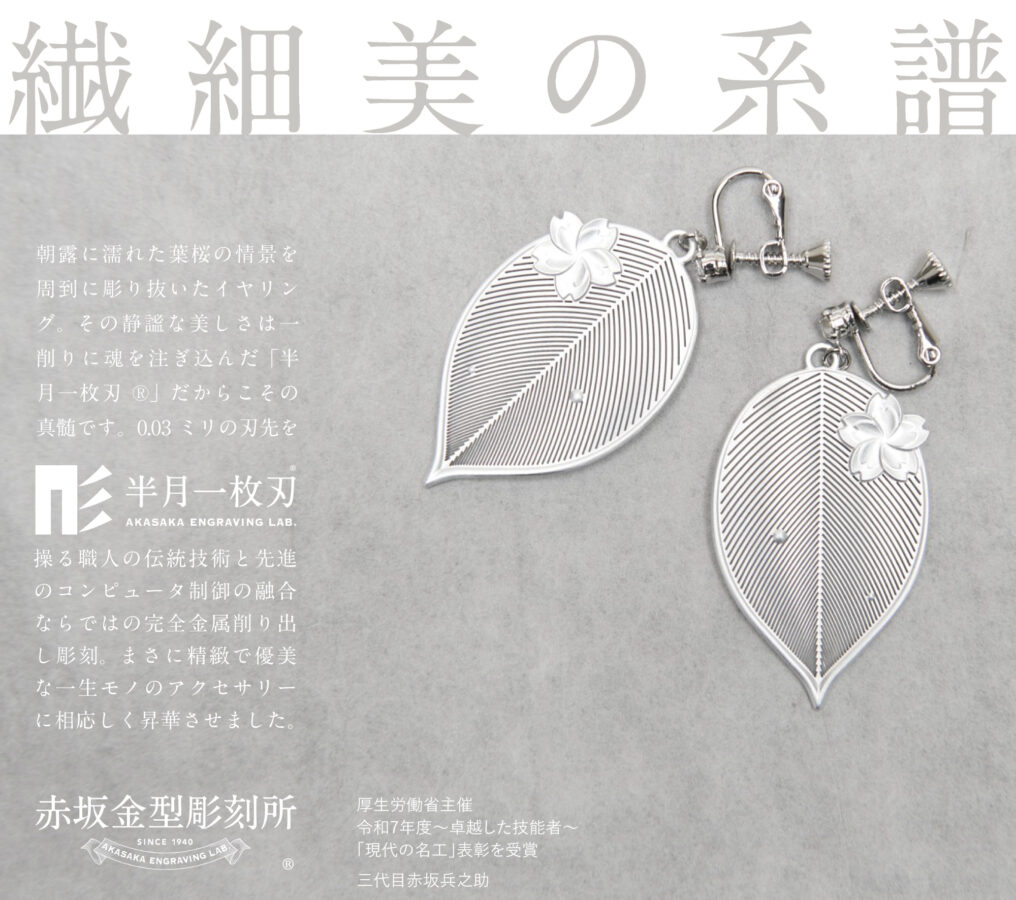
朝露をたたえた葉桜。
その一瞬の情景を身につける「かたち」。
「半月一枚刃」と共に、
その先の繊細美へ。
─── Fumizuki, Morning Light Resting on the Leaves.
July, when the summer sun grows deeper
and the shadows of green become richer.
Since ancient times, this month has been called Fumizuki.
One explanation traces the name to Tanabata,
when people opened books
and inscribed poems and wishes.
Looking toward the sky,
listening for the presence of the wind,
and finding coolness in a single drop of dew upon a leaf.
Even in the height of summer,
the Japanese have long perceived beauty
in the changing of the seasons.
After its blossoms have fallen,
the cherry tree grows lush with leaves,
quietly carrying life toward the season to come.
Cherry leaves holding the morning dew—
a fleeting scene, given a form to be worn.
Together with the HANGETSU Single Blade,
toward the next realm of delicate beauty.